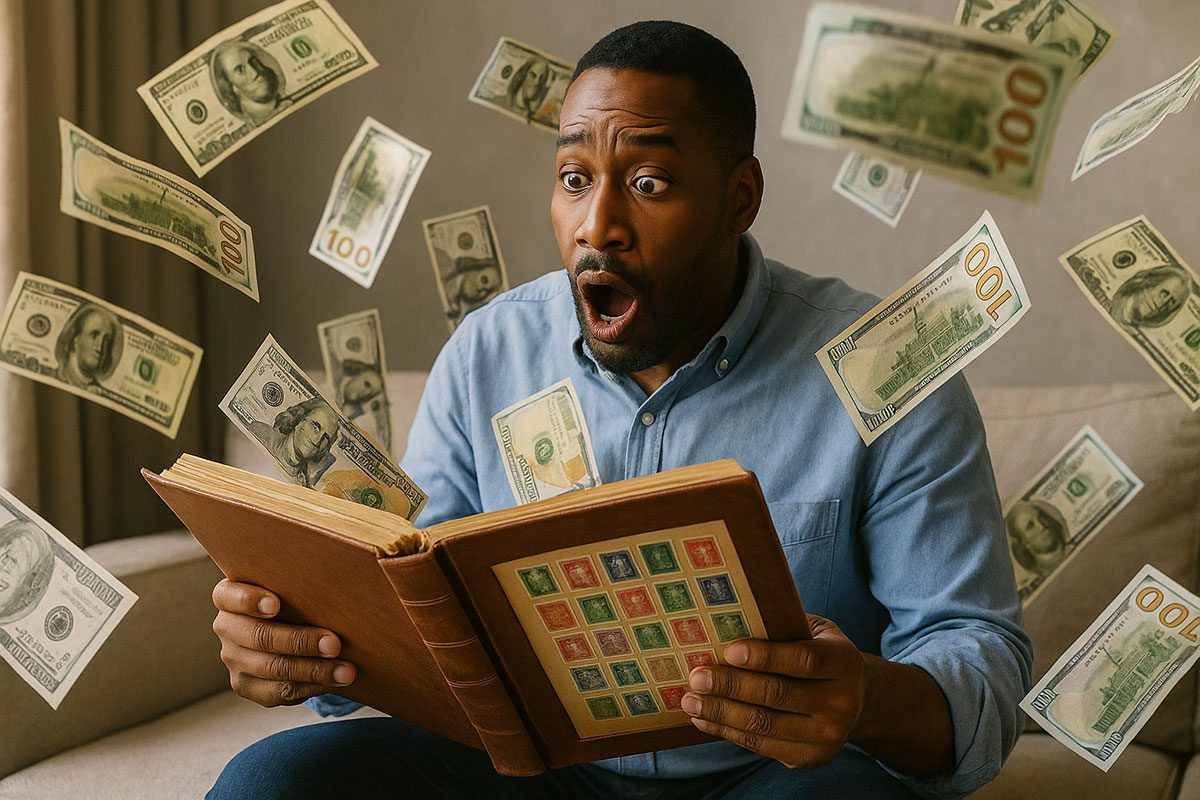
Across North America, basements and attics are filled with dusty binders, shoeboxes, and stock books holding the remnants of old stamp collections. For years, many have assumed these collections hold little more than sentimental value. But collectors and dealers are now uncovering surprising facts: certain stamps, even those considered common or outdated, can command thousands of dollars in the current market.
Whether inherited from a grandparent or gathered as a childhood hobby, these collections may contain overlooked treasures. The value isn’t always obvious to the untrained eye, but professional appraisal is revealing just how dramatically the stamp market has shifted.
Why Now Is the Right Time to Reevaluate
The stamp market is undergoing a notable transformation. Demand for rare material has intensified, and collectors are paying top dollar for high-grade, well-preserved examples. Auction prices are breaking records, especially for 19th and early 20th century issues. A combination of generational estate transfers, renewed interest in tangible assets, and scarcity of high-quality material is fueling a surge in market value.
COVID-era collecting habits also played a role. With more people at home, hobbies like philately saw a revival. As online marketplaces expanded, collectors began competing more aggressively, pushing prices upward.
Stamps That Are Commanding Top Dollar
Some stamps are consistently outperforming expectations. Examples include:
- Classic U.S. stamps from 1847–1900, particularly unused examples with original gum
- High-denomination Columbian and Trans-Mississippi issues
- Error stamps such as inverted centers or misperfs
- Graded stamps, particularly those certified by the PSE, PF, or PSAG
- Early airmail and revenue stamps in pristine condition
- Rare foreign issues from British Commonwealth countries, early Canada, and German States
It’s not unusual for a single certified stamp in exceptional condition to sell for $5,000–$50,000, especially if it receives a high grade like XF-Superb 95 or above.
Condition and Certification Are Key
Collectors know that condition drives value. Two stamps that appear identical can vary wildly in price based on gum quality, centering, perforation completeness, and presence of faults. As a result, professional grading and certification have become the gold standard in stamp valuation.
Services like Professional Stamp Experts (PSE), Philatelic Foundation (PF), and American Philatelic Expertizing Service (APEX) issue certificates that authenticate and grade stamps. Collectors and buyers place significant trust in these certifications, and stamps accompanied by expert certificates typically sell for far more than uncertified counterparts.
What You Might Overlook in a Collection
Many valuable stamps do not immediately stand out. An album from the 1930s may include overlooked varieties, precancelled rarities, or high-value airmails. Coil waste issues, tagged errors, watermark varieties, and color shifts often hide in plain sight.
In addition, certain postal history items — covers, postcards, or envelopes bearing unusual rates or destinations — can command high prices. For example, airmail first flight covers, transatlantic Zeppelin covers, or Civil War patriotic covers are increasingly sought after.
Common Misconceptions About Stamp Value
There’s a widespread belief that all old stamps are valuable. In reality, millions of 20th-century definitive stamps were mass-produced, and many collections contain only minimal-value material. On the other hand, collectors often discard what appear to be duplicates or minor varieties without realizing their potential.
The misconception works in both directions. A seemingly boring commemorative issue may contain a rare plate variety, a grill type, or a scarce tagging error. Unless a collection is examined by someone trained in philately, these hidden gems may be lost to time or sold far below market value.
Inherited Collections Often Hold Surprises
Many collections passed down through families include earlier material acquired during a period when stamp collecting was more widespread and serious. Collectors in the 1930s–1970s were more likely to buy high-quality mint issues, first day covers, and commemorative sets. Some subscribed directly to postal services, and others bought from dealers by mail.
Because these collectors lived through some of the most valuable issuing periods in U.S. and world postal history, their collections can yield rare finds. U.S. stamps from the 1860s–1890s, Canadian Queens and Admirals, or early British colonies may be tucked into the middle of otherwise average albums.
Pricing Trends: What Dealers and Collectors Are Paying
Prices for rare stamps have seen steady increases, particularly those in investment-grade condition. Auction houses such as Robert A. Siegel, Harmers, Cherrystone, and Daniel F. Kelleher report fierce bidding for classic U.S. stamps, especially when accompanied by certification.
Retail demand has also increased, particularly through websites like HipStamp, eBay, and specialized dealers. Unused sheets from the mid-20th century are selling at or above face value — and certain premium commemoratives are fetching multiples of their original denomination.
Retail sales of high-grade 20th century commemoratives are also up, especially for full sheets, plate blocks, and singles in mounts. Demand for PSE-graded stamps in the 90–100 range has created a submarket focused solely on numerical grade as the determinant of price.
The Grading Boom: XF 90, XF-S 95, GEM 100
Grading services have turned stamp evaluation into a precise science. Centering, color, gum, and perforation are now measured and scored. PSE’s numerical system ranges from F-VF 75 to GEM 100, with values escalating exponentially as grades approach the upper end.
For example, a U.S. 1901 Pan-American 10¢ invert stamp might be worth $15,000 in VF condition. That same stamp graded XF-S 95 with a PSE certificate could sell for over $35,000.
Dealers and auction houses are increasingly focused on marketing stamps by grade, and many collectors seek to build “registry sets” with only the highest-graded examples. This trend has placed a premium on quality and driven the market for third-party certification.
How to Get a Collection Appraised Properly
A professional appraisal is the only way to understand the true value of a stamp collection. While some local stamp clubs or dealers may offer informal opinions, serious evaluations should be done by professionals with experience in buying and selling certified material.
Appraisers consider catalog value, market demand, condition, and certification status. They also account for current trends — for example, increased demand for certain issues from British colonies or spikes in demand for error stamps due to media coverage.
Online appraisal services and trusted buyers like West Coast Stamps offer fast, secure options for owners who want to sell, insure, or simply understand what they have.
Selling Your Collection: What You Need to Know
If you’re ready to sell, it’s essential to know how to navigate the market. You have several options:
- Direct sale to a dealer: Fast, reliable, but often at wholesale prices.
- Auction: High potential return for rarities, but slower payout and higher fees.
- Consignment: You retain ownership until it sells, but it may take time.
- Online platforms: Sites like eBay or HipStamp allow direct access to collectors but require knowledge of listing, grading, and shipping.
A reputable stamp buyer can guide you through the process and help you avoid common pitfalls like undervaluing certified items, shipping without proper insurance, or accepting lowball offers from opportunistic resellers.
Modern Trends: Millennials and Digital Philately
A new generation of collectors is entering the market. Millennials are rediscovering philately through digital platforms, social media, and investment-based collecting. Many are interested in postal history, topical themes, or blockchain-backed digital philatelic assets.
This renewed interest has created fresh demand for classic material — particularly certified, investment-grade stamps. As a result, the overall value of older collections has risen to match modern demand.
Younger collectors often buy based on aesthetics or rarity, and many are entering the space with higher disposable income, driving demand for premium material in a way not seen in decades.
Common U.S. Stamps Worth Revisiting
Some of the most commonly overlooked high-value U.S. stamps include:
- 1869 90¢ carmine and black
- 1893 $5 Columbian
- 1901 Pan-American inverts
- 1918 Jenny invert
- 1923 $2 and $5 Capitol and Freedom issues
- Early Official stamps and Postage Dues
- Pre-1900 Revenue stamps and Match & Medicine issues
- Modern errors: missing colors, misperfs, and tagging mistakes
These stamps, if found in high condition and paired with a certificate, can turn an ordinary album into a windfall.
Foreign Collections Are Often Underestimated
Collections that include foreign material — especially from British Commonwealth, early European powers, and Latin America — can yield exceptional results. Issues from Canada, Great Britain, Australia, Germany, and France can be highly collectible depending on the era and condition.
Colonial issues, war-era stamps, and occupation-zone postal history are all in demand. Additionally, older Asian stamps — particularly from China and Japan — are seeing explosive growth in value due to a strong international market.
Even if you don’t recognize the country or can’t read the characters, those foreign stamps in the back of your album may be worth far more than expected.
How to Preserve Value While You Decide
If you’re not ready to sell but want to preserve the collection’s value, start by maintaining it in a cool, dry environment. Keep stamps in mounts or glassine envelopes, and avoid touching gum with bare hands. Albums should be stored flat, not upright, and never exposed to sunlight or moisture.
Consider scanning or photographing the collection for digital backup. If the collection includes certified stamps, keep the certificates with the stamps. If it contains postal history, note any family significance or correspondence dates that might affect value.
When in doubt, keep everything intact until a professional appraiser can sort through the material.
The Bottom Line on Stamp Collections Today
Whether you’re holding onto childhood memories or managing an inherited estate, your stamp collection could be worth significantly more than you realize. As the philatelic market surges and collectors compete for the best material, even the most unassuming albums may contain valuable surprises.
At West Coast Stamps, we specialize in helping collectors unlock the hidden value of their collections. Whether you’re ready to sell or just curious, we provide honest, expert evaluations and fast turnaround.

Leave a Reply